Governing Board Bio
|
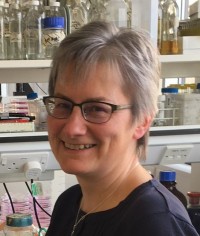
The president, Catherine J. Lilley is a researcher in plant nematology. After completing a degree in Botany and then a PhD at the University of Durham, she joined the Plant Nematology Group at the University of Leeds. During her time there she has been involved in a wide range of research projects, from lab bench to field, but she has always had a particular interest in the molecular mechanisms that underpin the plant-nematode interaction. |
|
 |
| The secretary, Sebastian Eves-van den Akker was educated at the University of Leeds and the James Hutton Institute. In 2018, he started the Plant-Parasite Interactions group at the Department of Plant Sciences, University of Cambridge. Sebastian is a geneticist, interested in the genes that control the dialogue between plants and their parasitic nematodes | 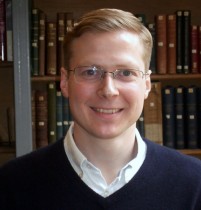 |
|
|
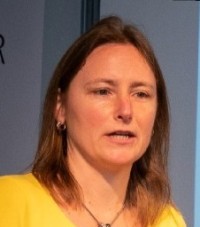
The treasurer, Evelyn Van Heese is Scientific Researcher at Netherlands Food and Consumer Product Safety Authority. Wageningen, Netherlands. She is also, amongst others, member of the EPPO Panel on Diagnostics in Nematology
|
 |
|
| Olivera Topalovic completed her studies at the University of Belgrade and obtained her master's degree in nematology from Gent University, Évora University and Wageningen University. She completed her PhD at Julius Kühn Institute. Olivera joined INRAE (IGEPP unit in Rennes) in 2025. Her research is focused on plant-nematode-microbe interactions in soil and their role in plant health. |  |
|
| Wim Bert completed his studies in Biology and Nematology at Ghent University. He is now responsible for the Nematology Research Unit and the International Master of Science in Agro and Environmental Nematology, Ghent University. His current work centres on taxonomy, phylogeny, morphology, and biology of nematodes from natural and agricultural ecosystems, hereby integrating a tradition of light-microscopy and ultrastructural morphology with molecular approaches. For the ESN he is responsible for the website and the Facebook page | 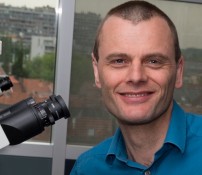 |
|
|
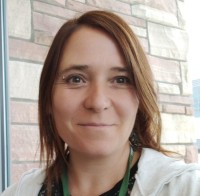
Sara Sánchez-Moreno completed a PhD at the University of Alcalá on soil nematode ecology. She has developed a number of projects on the use of nematodes as bioindicators of the effects of agricultural management and other anthropogenic impacts on nematode diversity and soil functioning. She currently leads the Spanish National Laboratory for Plant-parasitic Nematodes and Arthropods at the National Museum of Natural Sciences in Madrid. |
 |
|
|
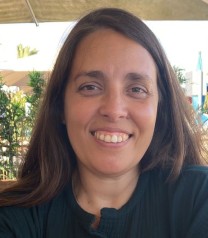
Cláudia Vicente |
 |